
We will dive into feedback from participants across two sessions to provide a broad qualitative analysis. Questions were posed to the group as a whole with plenty of space for open-ended responses. We recorded the audio on a mobile phone and used Vibe to create transcriptions which we then verified by hand.
It’s worth broadly characterising our participants first. Most participants hadn’t tried table-top RPG sessions before and came from a technical background. It’s hard to disentangle the Funiki-specific enjoyment from the general table-top RPG experience. Furthermore, participants were probably more likely to be interested in technology and forgiving to operating at the bleeding edge of technology.
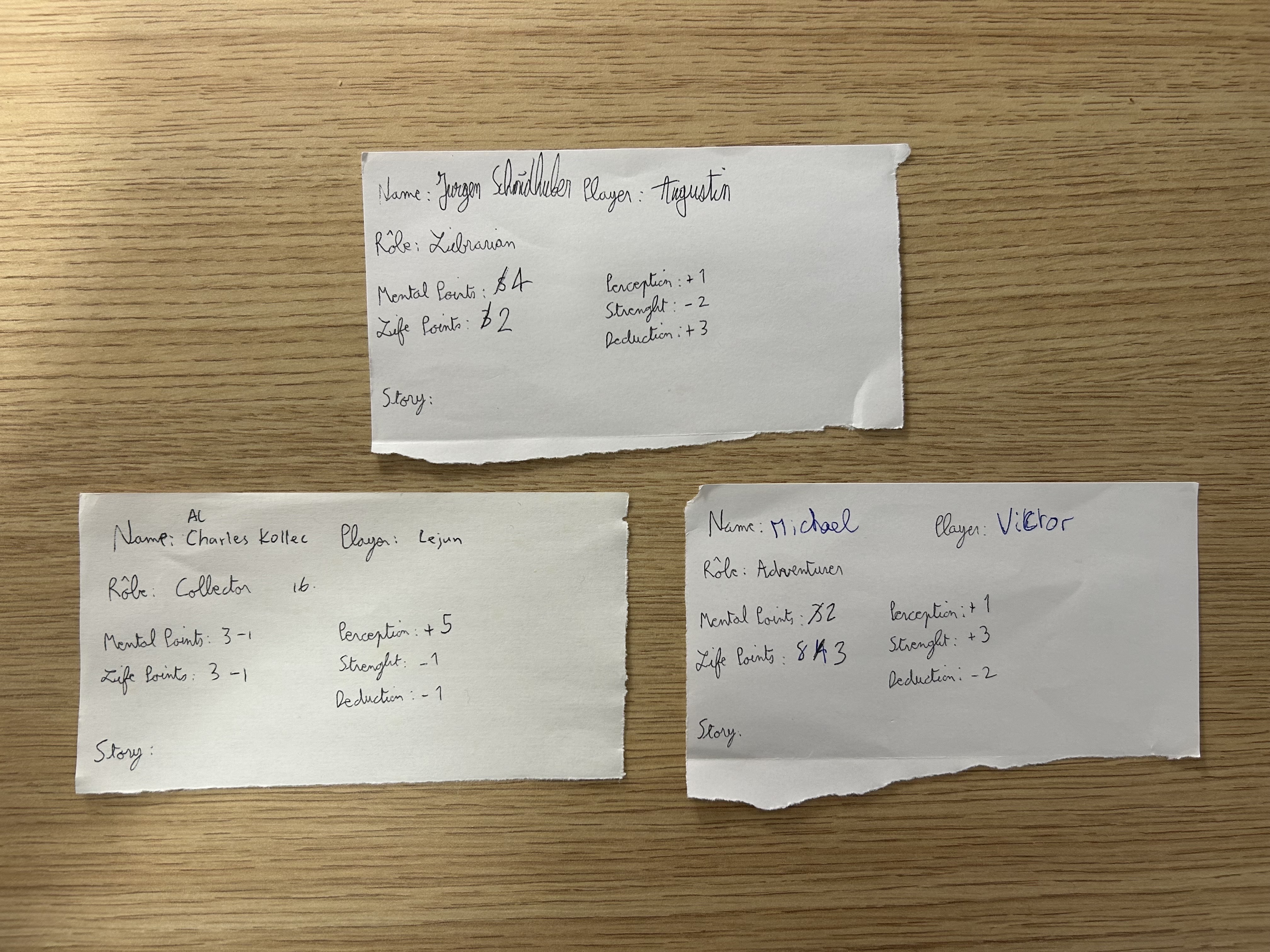
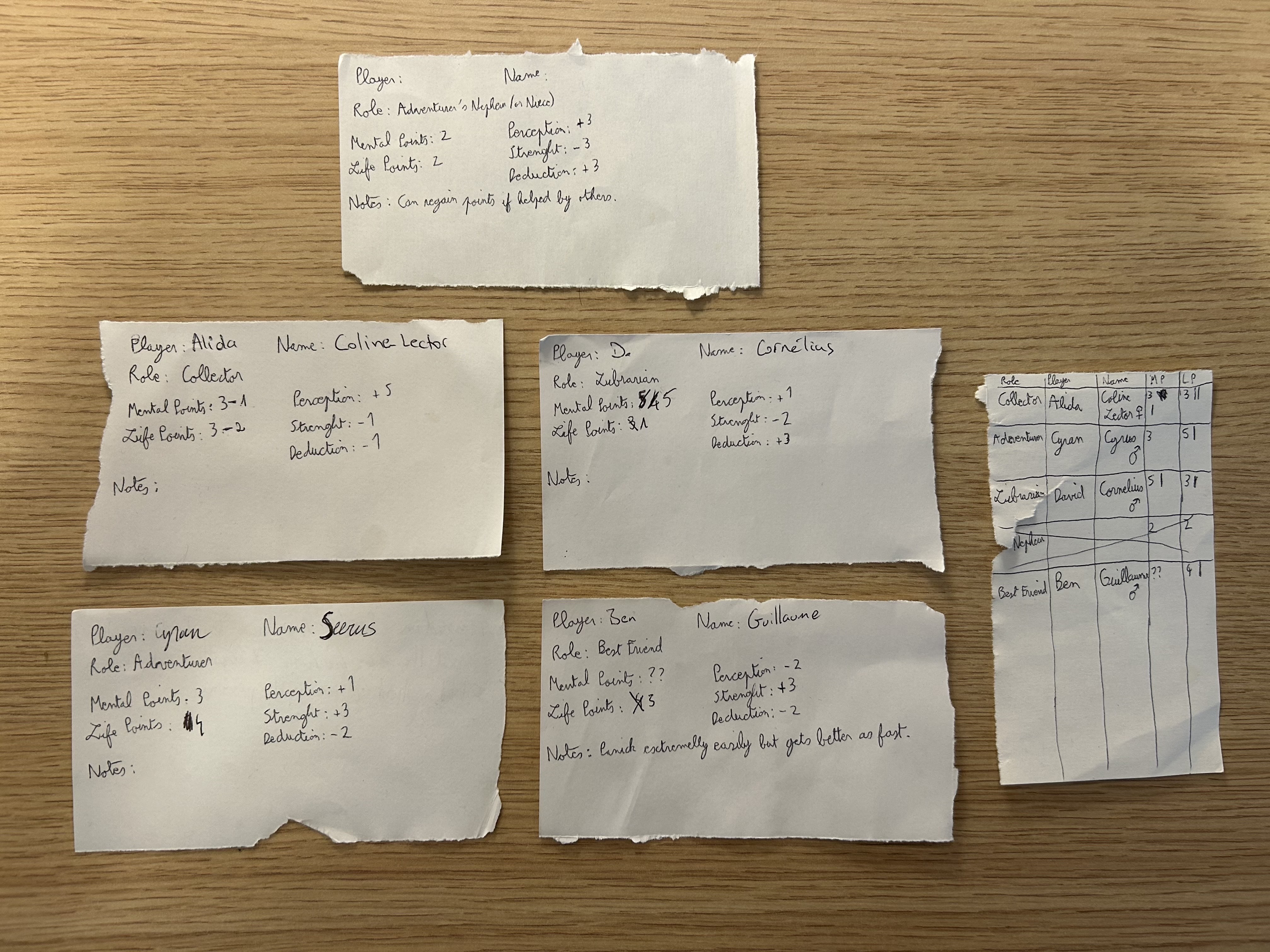
As this feedback is informal and at an initial stage of the project this feedback mostly serves to provide general impressions about the project rather than a definitive statement on it. I’ve also chosen not to attribute the quotes to the participants in particular.
18th July 2025
General impressions
We had very positive feedback in general. Participants appreciated the ambience provided by lights and sounds and had at least some moments they felt were particularly memorable.
I was very happy to discover a new atmosphere.
Yeah, it was exciting each time.
The atmosphere was, like, I was really in it. Yeah. Especially at the beginning, like, uh, with the lighthouse and everything and the rain, uh, it was very cool.
And, uh, true thing is that when you have the sound, uh, synchronized with the light, it’s really great. That’s cool.
I was very happy to discover a new atmosphere, you know.
It was exciting each time.
We were like immersed like yeah yeah the immersion really worked well.
now i can’t play any more role play games without lights
Was it a novel experience?
Have you had simlar experiences? Like in an installation or an escape game?
I didn’t have like ‘wow’ the lights were crazy and yeah and the light was just there to to light the room… but [with funiki] I like that the lights are like simulating things you know yeah and so it’s cool because the thing is not here but we can like imagine it helps like imagine something so you can imagine everything like reading a book like you can yeah that’s true
It’s like helping you um imagine it in more details but like with more freedom
It’s very powerful actually yeah and maybe even more than sound yeah
The powerful thing for the lights is that we’re sort of generating this image from for ourselves but this is sort of as a condition or a clue for the generation yeah that’s it i think it’s it works pretty well yeah that’s part of the philosophy it works well to not to not give you literal versions of the reality except for the sounds of course
Related to Sound
In general they wanted more sound effects and, in particular, surround sound.
The sound was not, uh, loud enough, you know.
Suffices to put you in the experience
It’s, it could be like crazy.
But with the surround sound.
Though we thought that sounds were a more literal representation there was still plenty of space for imagination. In the scene outside the lighthouse we were only playing the sound of waves. However, in the discussion participants had heard or remembered sounds that weren’t there.
Was there like rain? Was it raining?
Maybe in terms of sound, we could have had more. I don’t remember if there was wind or not. Maybe we could have had some wind.
This could also be because the general mono sound of waves is somehow in the general semantic field of ‘water’ and the speaker was placed between participants rather than at the location one would expect waves to be (somewhere at the periphery). Combined with other light and narrative cues it just becomes another hint at the composition of the scene.
Physicality
Making sense of the lights
In the discussion it was clear that participants were trying to piece together the physicality of the scene. In particular, within the lighthouse, the participants could still see the lighthouse light spinning around but then they asked themselves, why are they seeing this from inside the lighthouse similar to the outside?
Especially I love the lighthouse. Yeah, it’s nice. The only thing with that is if we are inside the lighthouse, then why do we see it? Maybe because we only have one window and so we see the light when it comes on the side of the window. That’s what I tried to do. I could have a little light of everything.
Placement on a map
This topic also came up within the lighthouse where they questioned which floor they were on.
I wasn’t really well able to know at which floor we were. That was one thing. Apart from that, uh, like when we knew, I could see the room and everything, but, uh, I wasn’t always aware, uh, at which point of the lighthouse we were.
Which is interesting.
Exposed to a generic location like a lighthouse, it’s easy to imagine yourself at that location. There is also probably only one door one would imagine (the front door) which anchors the imagination of participants. But when it comes to building a finer-grained map, more precision is required.
The Size of Spaces
Participants described their imagined ‘size’ of the first room in the lighthouse.
I feel like the living room is pretty large. It’s like a castle. Now when I’m thinking, it’s actually just like a lighthouse. To me, I really imagined that you had the lighthouse and you had like a very little house attached to the lighthouse and the living room was in this little house.
It’s true that in my head the living room was very big. I don’t know why I had that impression. To me too then. That’s why I didn’t think we were right inside the lighthouse but like next week. And then to go see the, we entered the stairs of the lighthouse. And then when the light goes out. The light goes out and then there was like the, the commences. Yeah, it was great. That was cool. That was scary actually.
In our physical space were were in a fixed size room and our lights can’t change that too much. That is particularly true when the room is fully illuminated. With the candle light effect the borders of the room become dark which makes it easier to imagine that the room is larger, but ultimately individuals perceived very different sized rooms when the room was entirely lit.
Literal vs Figurative
So were you imagining the space or were you sort of more focusing on the activities that you had to do?
Imagining the space. Yeah, I really was imagining the space. I think I can draw every single place.
I don’t know if you played Animal Crossing. At the beginning, for me, I was in the game. When you start the game, Animal Crossing, you’re in a taxi, and it’s raining, and it’s dark, and it’s the same lights. And so I was definitely in the same mood.
Interestingly participants imagined a similar location for the village though there weren’t many cues for the village itself.
And then the village, I don’t know how you… To me, it was really, like, one main street of the village.
Yeah. Yeah. Like, in Brittany. Yeah. And paved with stone, you know, a hole in stone. And with the lighthouse in the distance, yeah.
Maybe not the right, same direction as the street, but more, like, yeah, on the side, and you had to go through the whole desserted street, and then going to more, yeah, a bit more wild terrain until the lighthouse and the sea that was in front of you.
Comments on Specific Scenes
Taxi Scene
Um, I don’t know if you played like Animal Crossing. Uh, yeah. At the beginning is like, for me, I was in the game, you know? Like, I don’t know if you, when you start the game, Animal Crossing, you’re in a taxi, and it’s raining, and it’s dark, and it’s the same lights, and everything, and so I was definitely on the same mood, so, uh.
One comment that was interesting was that it was hard to get the dynamics of the taxi because particpants were facing eachother rather than facing the direction of the taxi. It would have been relatively easy to rotate the effect but just as easy to ask particpants to re-orient themselves to more actively particpate in the role playing.
The, the light was maybe a bit, like, uh, unpredictable, I don’t know. But, because in the taxi, you would expect to have some, uh, reverber, uh, reverber, no, how do you say, uh, lens, you know, uh, on the side of the room, and I don’t know sometimes. But maybe it was also because we had, like, other cars coming in front of us, uh, randomly. So, to me, it was pretty convincing
we had, like, other cars coming in front of us, randomly. So, to me, it was pretty convincing.
Village
we all thought of only one street there may only be two of three because we we like felt wind in the one direction i’m really
wondering if it’s not because of that you know because why did we just i don’t know i don’t know maybe it’s also due to the lights of the moon and the i don’t know
uh or so maybe because uh yeah you’re influencing each other during the game and during the questions
so if you imagine yourself in the in one big street even without saying it you act like it yeah yeah maybe
Candles
Yeah, the candles was great. The candles was cool. Like with the sound and everything.
Yeah, and the true thing is that when you have the sound synchronized with the lights, it’s really great.
Outside the Lighthouse
And I, especially, I love the lighthouse. Yeah. You know. It’s nice.
My impression is that it’s super dark. Yeah. Me too. The only light is the moon and the lighthouse. And as we walk through, like, the first, like, the creature, the criminal, they appear just, like, in the dark. Out of the dark obscurity.
the fact that the lighthouse was turning around it was great so i feel like yeah movement could be even more
The next was when we knock on the door, I think. That was cool. The door cracked up. Yeah, yeah, yeah. And I like the fact that you said, yeah, yeah, I knock on the door and then the sound comes.
Lighthouse Room
Not after that? Yes. I was, I was still inside into it.
There was maybe only the part with, uh, uh, living room, which was a bit less
Maybe a, yeah, maybe a little, like, less white. A bit warmer. Yeah.
Lights Out
The light goes out. And then there was, like, the… Yeah, it was great. That was scary.
That was scary, actually.
Okay. Did you find it scary, you too?
Yeah, in a way. Like, I was not, like AHHH but safely scary. But I was in the mood
Yeah, yeah. It’s pretty immersive.
Especially when the red lights come.
Creature Attack
Yeah, yeah, yeah. When, yeah, that’s true. Like, when the creature attacks us, maybe, like, do some lights and some sounds and just, like, yeah. //S06: It could be more chaotic. Simulate the fight. (.)//
Because now the combat part is too peaceful. It’s more like a, like a verbal, you know, thing. It could be more intense in the sound and the light, I think.
Yeah, it could be more erratic.
It could be more chaotic. Simulate the fight.
More movements. More light plays.
Maybe like much clearer action like the you know you know with the lights.
I just have this idea like when you say like it sort of teleport to my back. The light in the back.
Once once you said that it went from a window to another it was more it was really clear yeah but that’s true that for the first fight it was really oh it’s here now.
I don’t know it could be a good idea like to to to represent the the creature as like a light like the room is dark and then the lights move and then it’s here oh it’s here and then oh it’s here you know i don’t know.
On Top of the Lighthouse
Yeah, I think the roof is the most clearest to me, because I know there’s a light in the center, and I know it’s, like, rotating, and it’s quite vivid as an image, yeah. (.) Compared to, like, something in the living room, because we just depict small things, like, not too many things in the living room that I don’t know what it really looks like, but for the roof, we know there’s a light, and we know we need to cope with it, and there’s some, like, blood-like substance, yeah. Yeah. So, it’s more vivid to me, in this case.
“The only thing with that is if we are inside the lighthouse, then why do we see, like, maybe because we only have one window. And so we see the light when it comes. Yeah. That’s my guess. On the side of the window.”
““I just have this idea, like, when you say, like, it sort of teleports to… To my back. The light in the back could light up, you know. (.) Yeah. (.)”
”