Our Digital Garden
Our digital garden has the following features:
- 👈 The Explorer Posts.
- 👈 The Resources Links, videos, books etc. from across the site.
- 👈 The Timeline Posts from newest to oldest.
- 👈 Glossary Terms and definitions used in the site.
- 👉 Table of Contents To keep oriented in longer documents.
- 👉 Back Links To see what posts point to the current post.
The value of Context-Rich Websites
Early websites were much more personalised and varied than the generic templated monoliths we have today. Platforms like X, LinkedIn and Instagram frame content within a generic design format with limited customisation. Your content fits within predictable boxes that can be dragged and dropped into any feed. That detaches the content from the conceputally rich topology of the individual. On the contrary, when you visit a personalised website, you visit that person in their home. Not a photo of that person in a gallery.
This format keeps with the philosophy of the Funiki project. Focusing on quality, personal and inter-personal experiences embeded in your space.
What is a Digital Garden?
Digital gardens are an alternative to modern websites. They are not a chronological feed of polished content, but a continually growing inter-connected web of ideas. Borrowing from Maggie Appleton’s “garden” metaphor, they privilege gradual growth over polished releases, letting notes and concepts mature in place rather than getting buried by time.
Some plants become “finished” artifacts, others stay as seedlings and sketches. Both of these matter: sketches keep the soil fertile and provide various points to spring-board off new ideas, while polished outputs mark waypoints and concrete points of output for communication and collaboration.
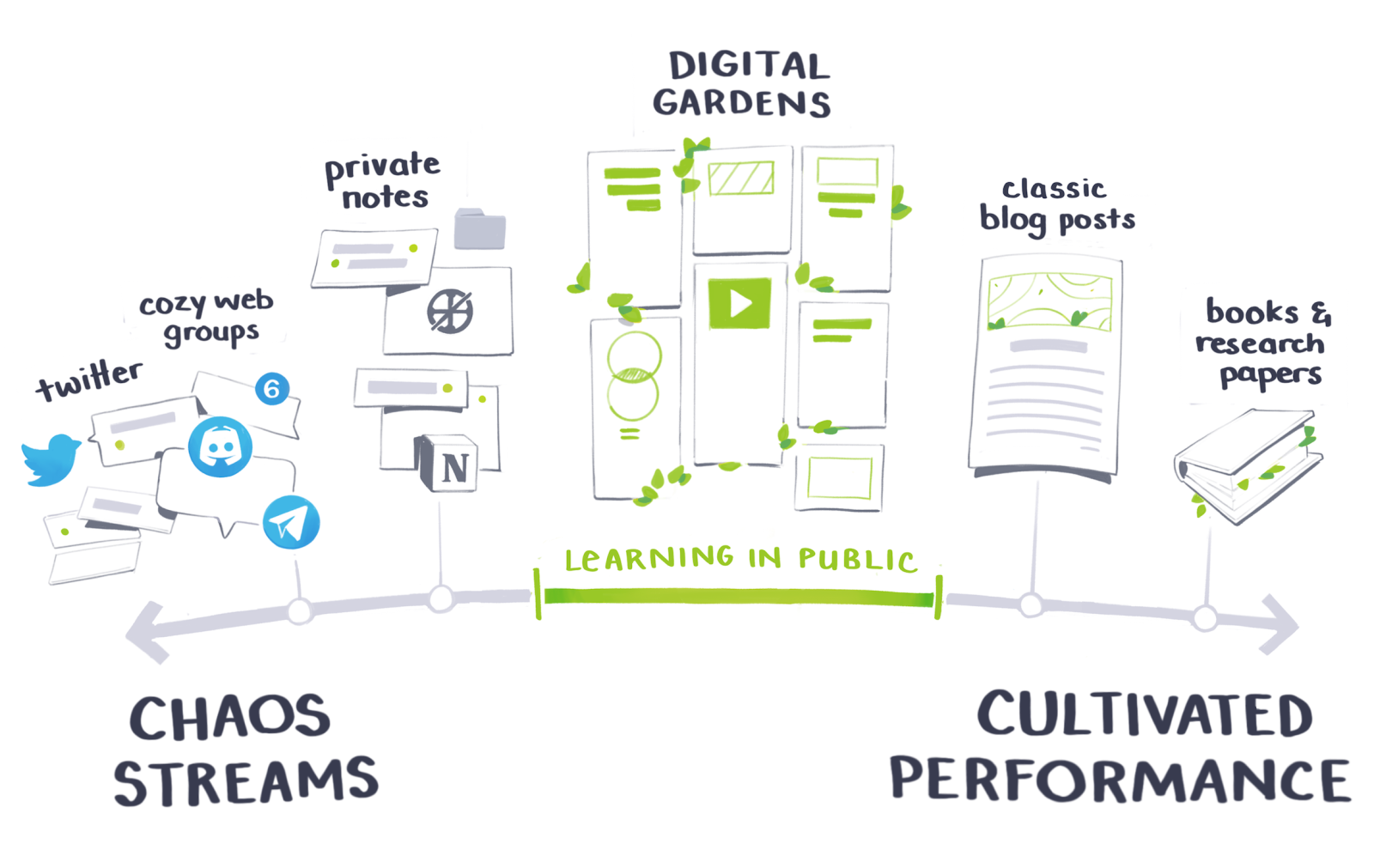
An evolving garden output—waypoints of clarity amid ongoing growth. Taken from Maggie Appleton’s blog.
A great exploration of the history and philosophy of digital gardens by Maggie Appleton.
A nice youtube video describing the digital gardens concept and how to set this up with Obsidian.
This is a curated list of inspiring public digital gardens.
A Topology of Ideas
Digital gardens shine when it comes to research notes, evolving concepts, work-in-progress, thinking—anything outputs. This is content that is supposed to resurface over time, cross-linking to other concepts, and being revised. The layout is deliberately topographic rather than just time-line based: you can wander the terrain, hop between related clusters, and see how topics interact with one another, rather than marching through a single linear path.
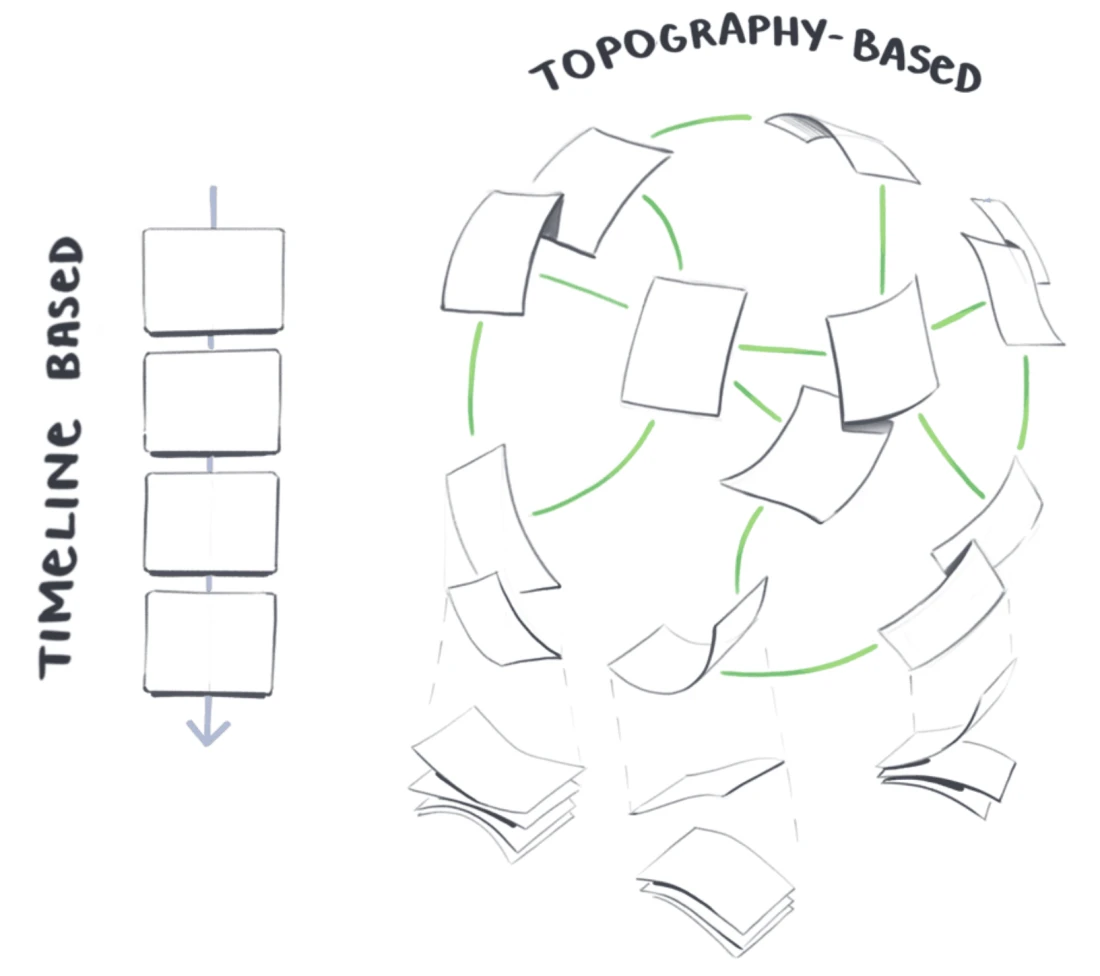
A topographic map of the garden—clusters, ridges, and routes between ideas. Taken from Maggie Appleton’s blog.
You might need to get to know that topology which might be a rich tangle of concepts that are personal to the author/project.