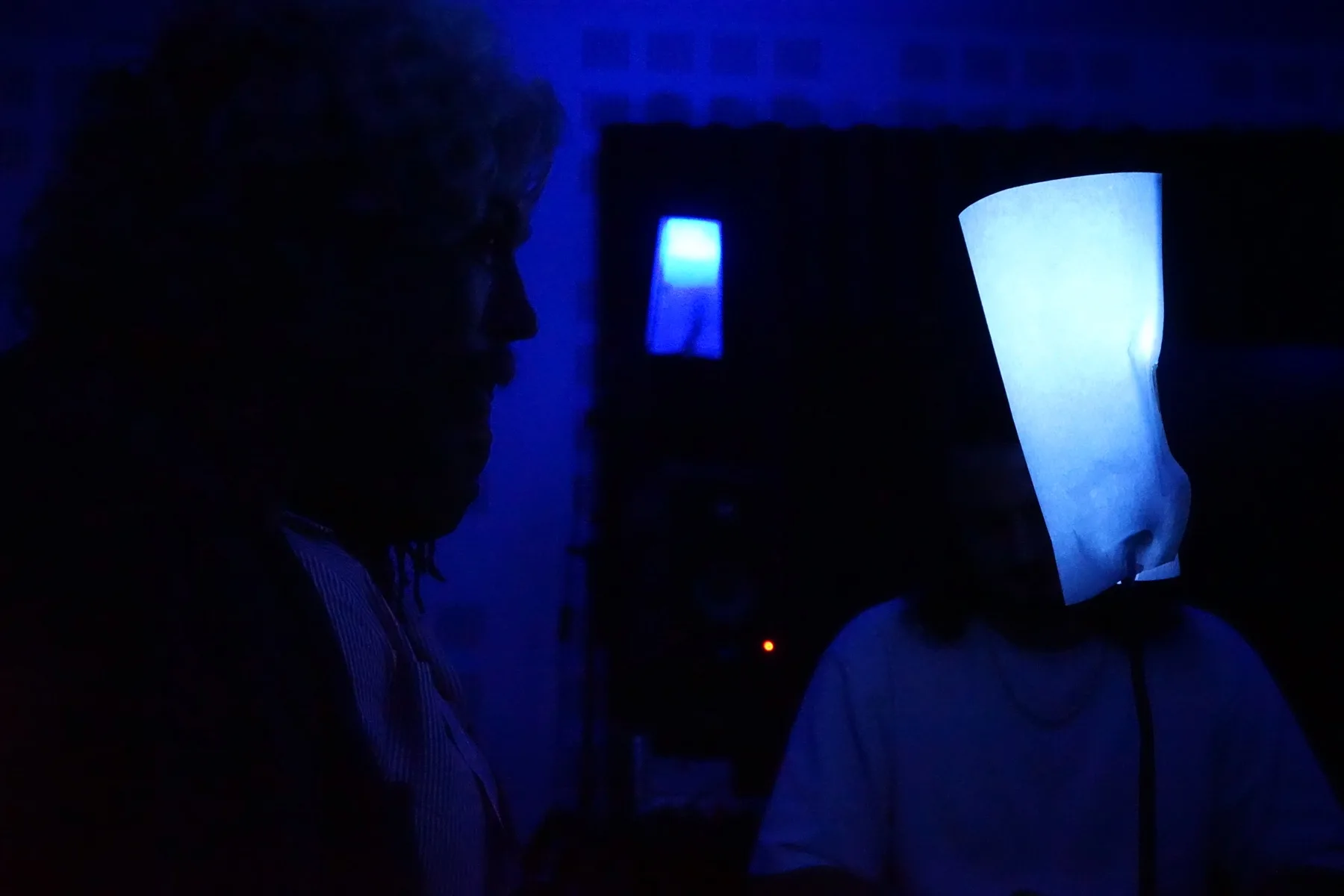
The Lighthouse was a collaboration with creative technologist Guillaume Boulliard. We wanted to explore what happens when Funiki’s responsive lighting system meets someone else’s creative practice, so we built a tabletop roleplaying demo around a Scooby-Doo-style seaside mystery.
Guillaume created the story and acted as game master. He narrated, rolled the dice and controlled Funiki while the players worked through the mystery together. The action took place almost entirely at night, giving artificial light a natural role within the fiction.
The mystery
There was room for the story to change in response to the players, but its basic sequence was:
- The group travelled to a small seaside village to meet Perrine Durand, a friendly lighthouse keeper. A strange goon warned them not to visit the lighthouse.
- They ignored the warning, approached the lighthouse and went inside.
- The electric lights failed, forcing them to continue by candlelight.
- When they tried to restore the power, an ominous red light appeared instead of the normal lighthouse beam.
- A spirit attacked the party and was defeated.
- The players found and opened a cursed chest.
- They returned to the police station, where the events were finally explained.
The familiar mystery structure gave each lighting transition a narrative purpose. Blue darkness marked travel and the coast; moving white light established the lighthouse; warm candlelight followed the blackout; and red signalled that something had gone badly wrong.
 The coast and village at night.
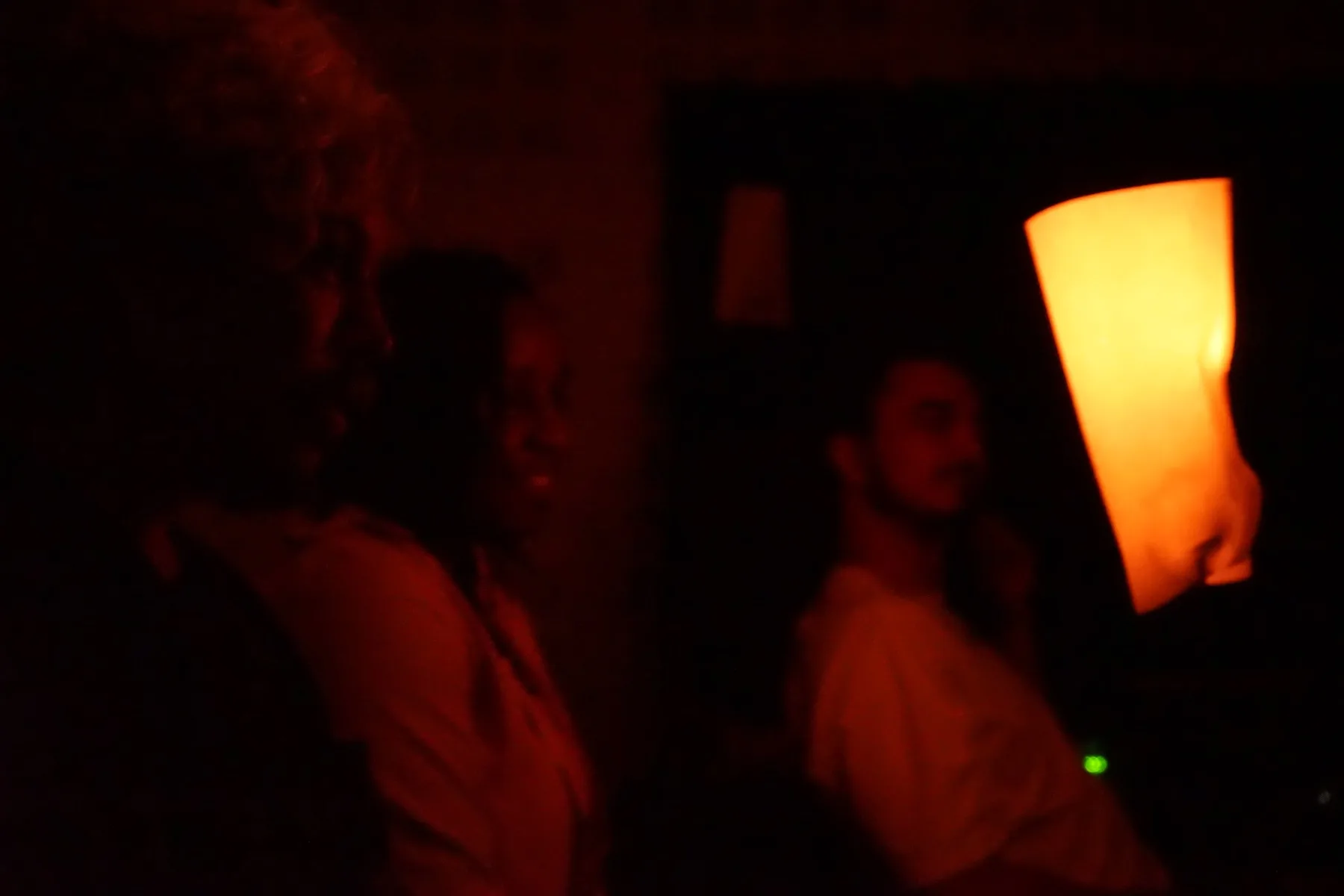 Exploring the lighthouse by “candlelight”.
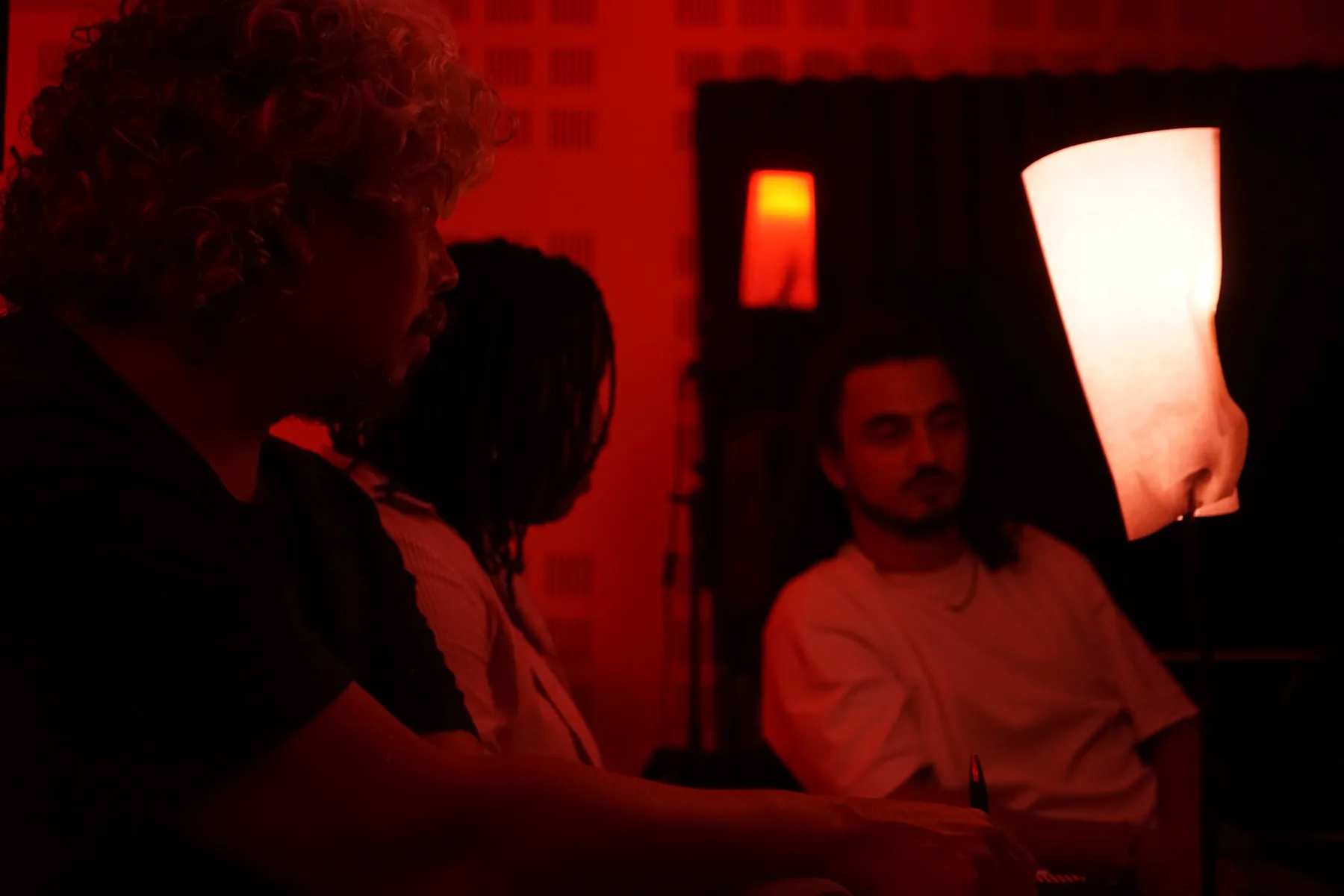 The mystery takes a more threatening turn.
The characters
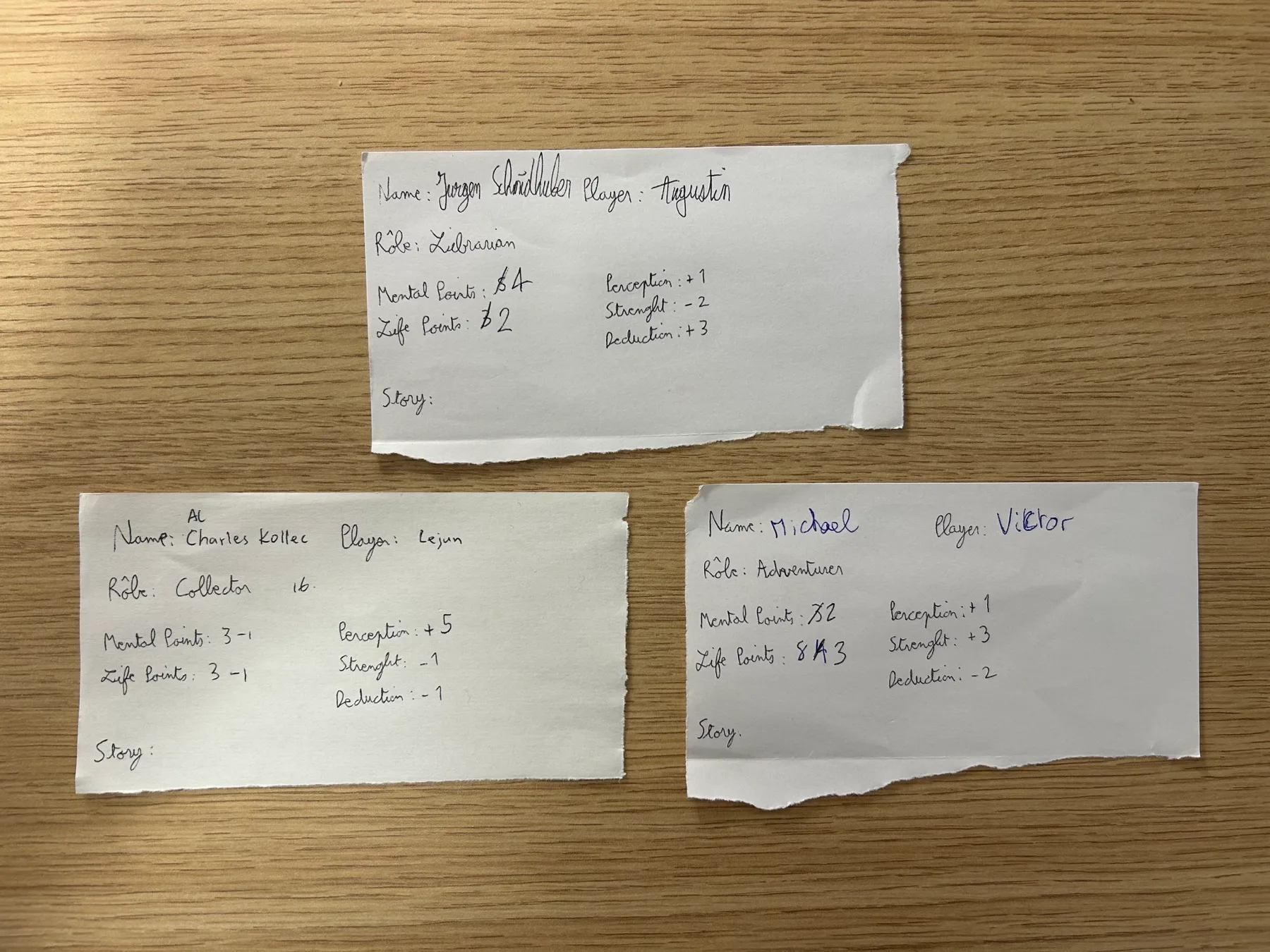
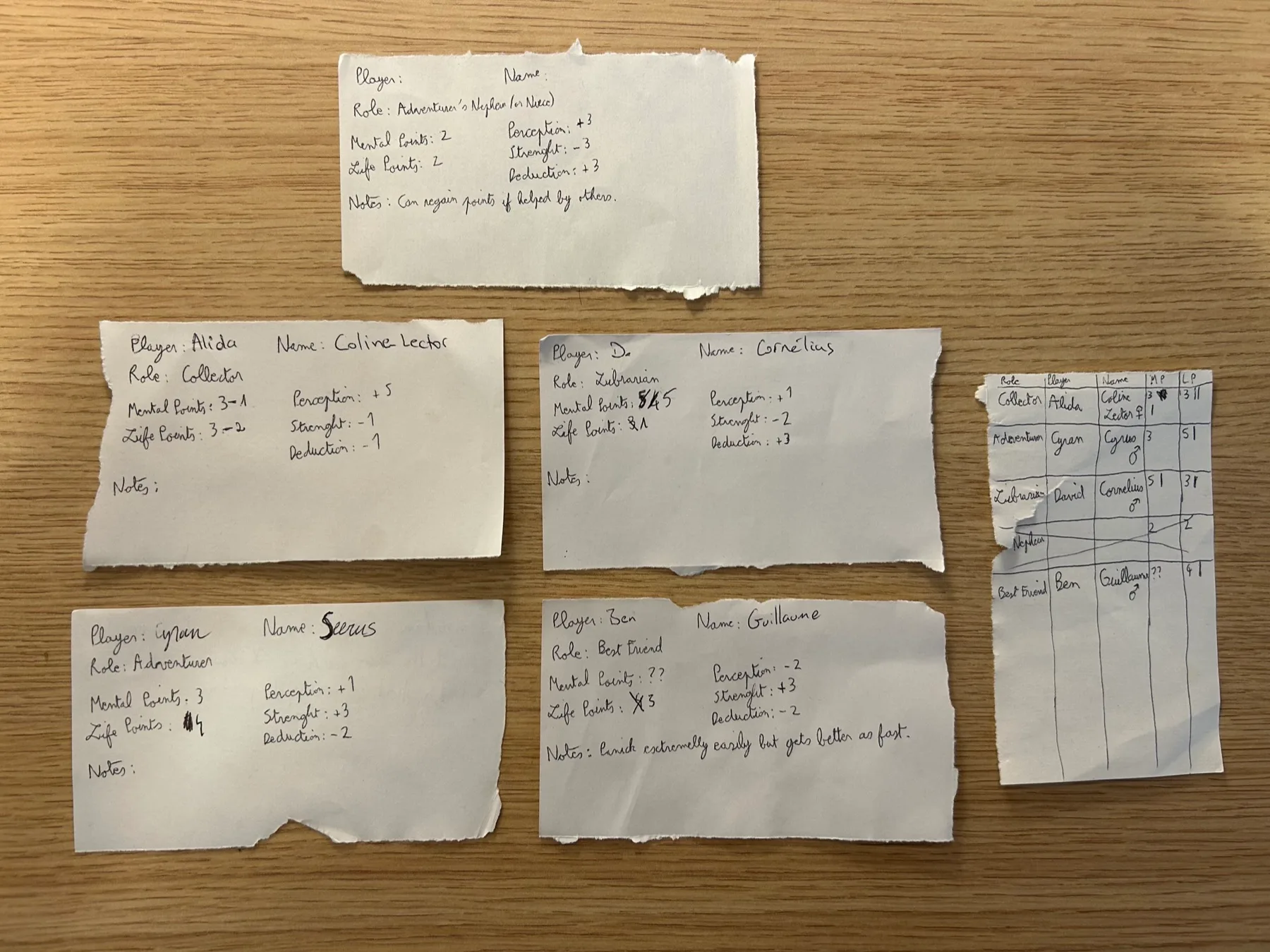
We ran two sessions, one with four players and another with three. Their roles included the adventurer, collector and librarian. The simple handwritten cards gave each player a name, role and a small set of attributes while leaving enough space for the character to emerge through play.
Guillaume’s storyboard
Before we implemented the experience in Funiki, Guillaume created an outline that connected the narrative sequence to its intended audio, lighting and transitions. It became the shared reference for translating the story into a playable technical system.
Download the original Lighthouse storyboard (PDF)
Next: how we arranged the room, lights and game-master station.